
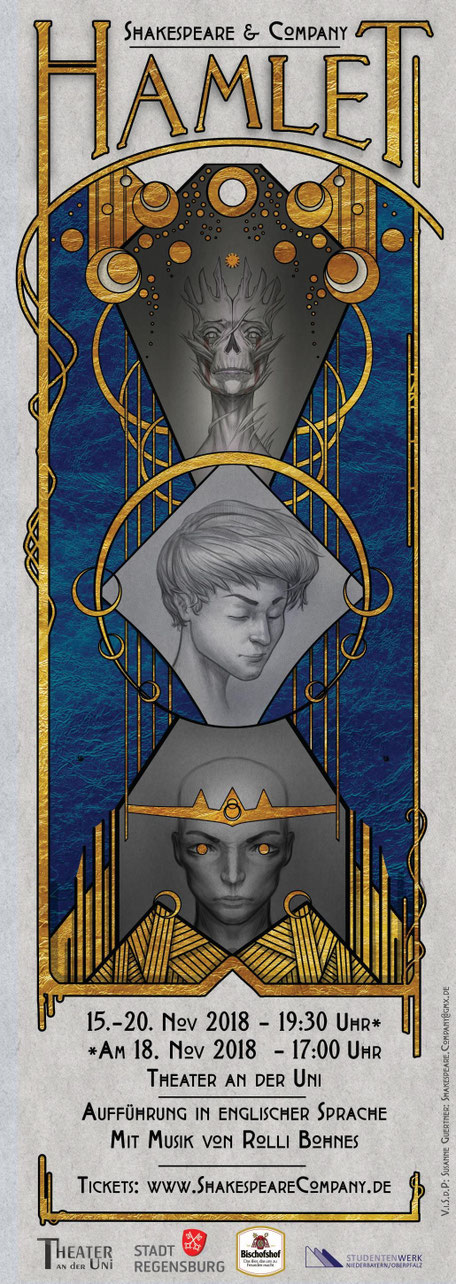
Hamlet
By William Shakespeare
Theater an der Uni
15–20 November 2018
Explore our image gallery, see some behind the scenes photos, or read more about our production here.
About this production
The Textual Version
When you search the Hamlet section in our library, you’ll notice that it spans several metres of shelf space. Looking at this vast amount of scholarly and artistic engagement with this play, the
main goal of a new stage production must be to find one’s own voice and message in the wealth of interpretations the play can offer. We started our search for our very own Hamlet by creating our
own version of the text by combining the two main source texts, the Folio version and Q2, while also occasionally retaining structural and textual elements of Q1.
The Stage Design
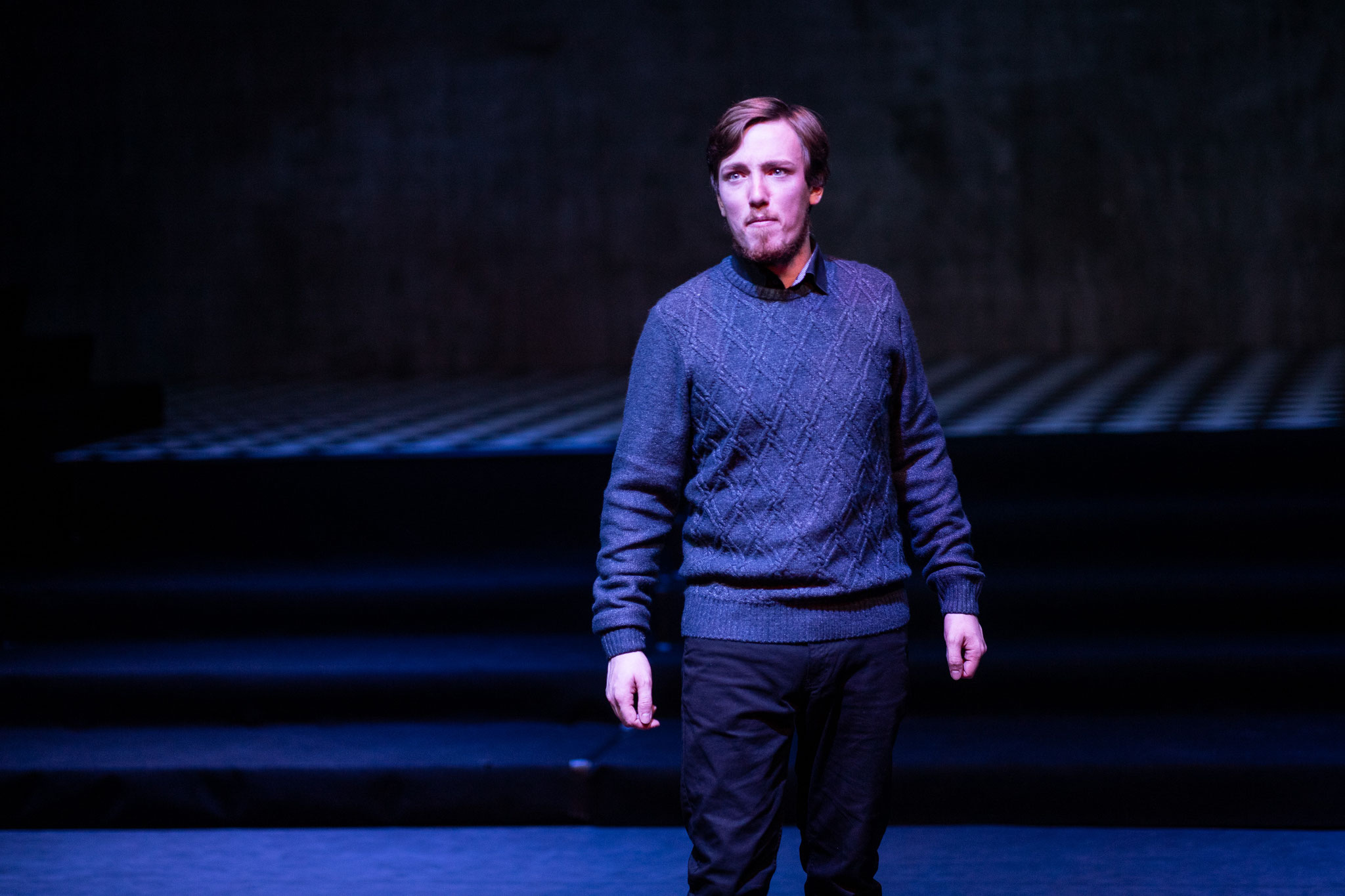
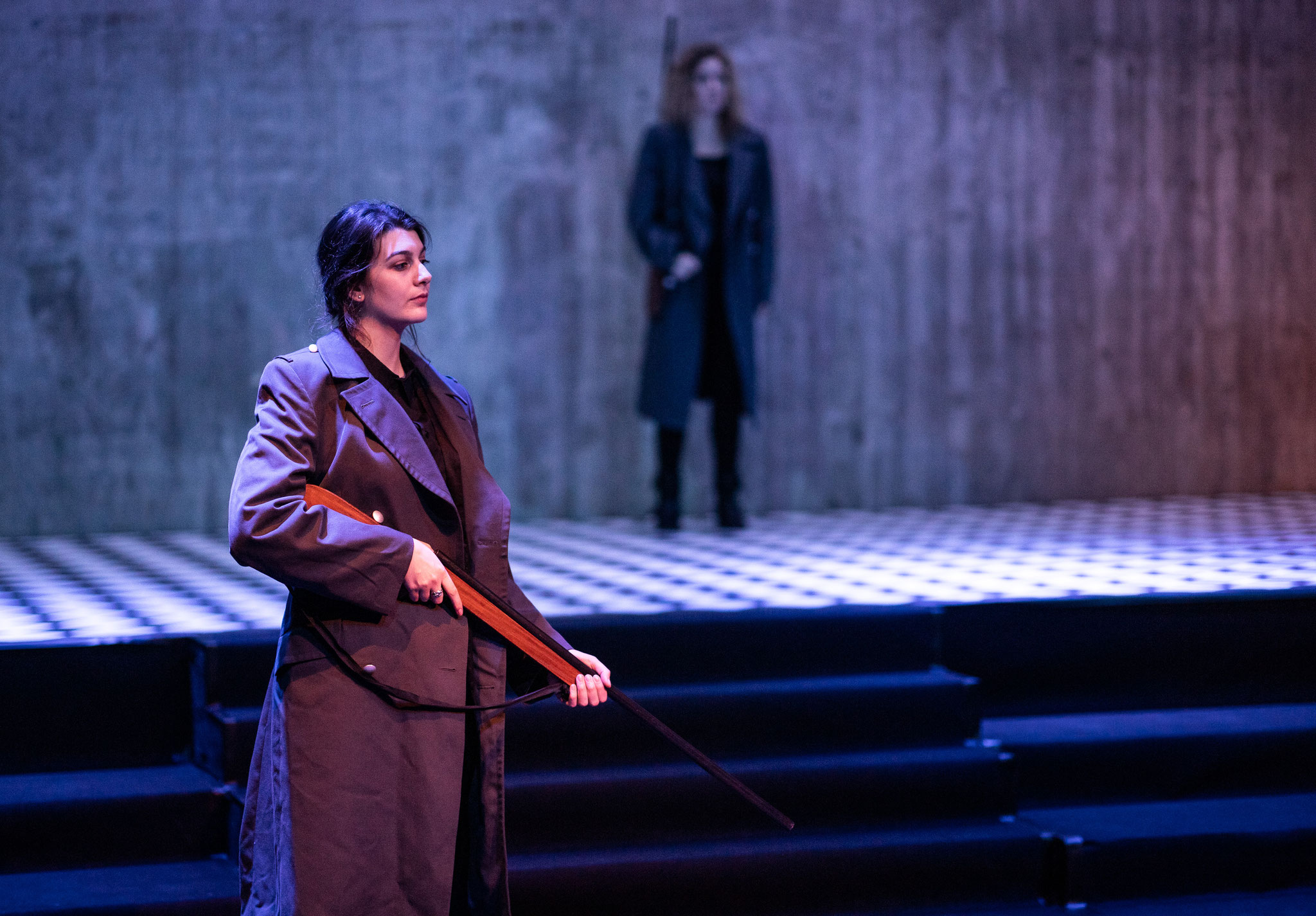
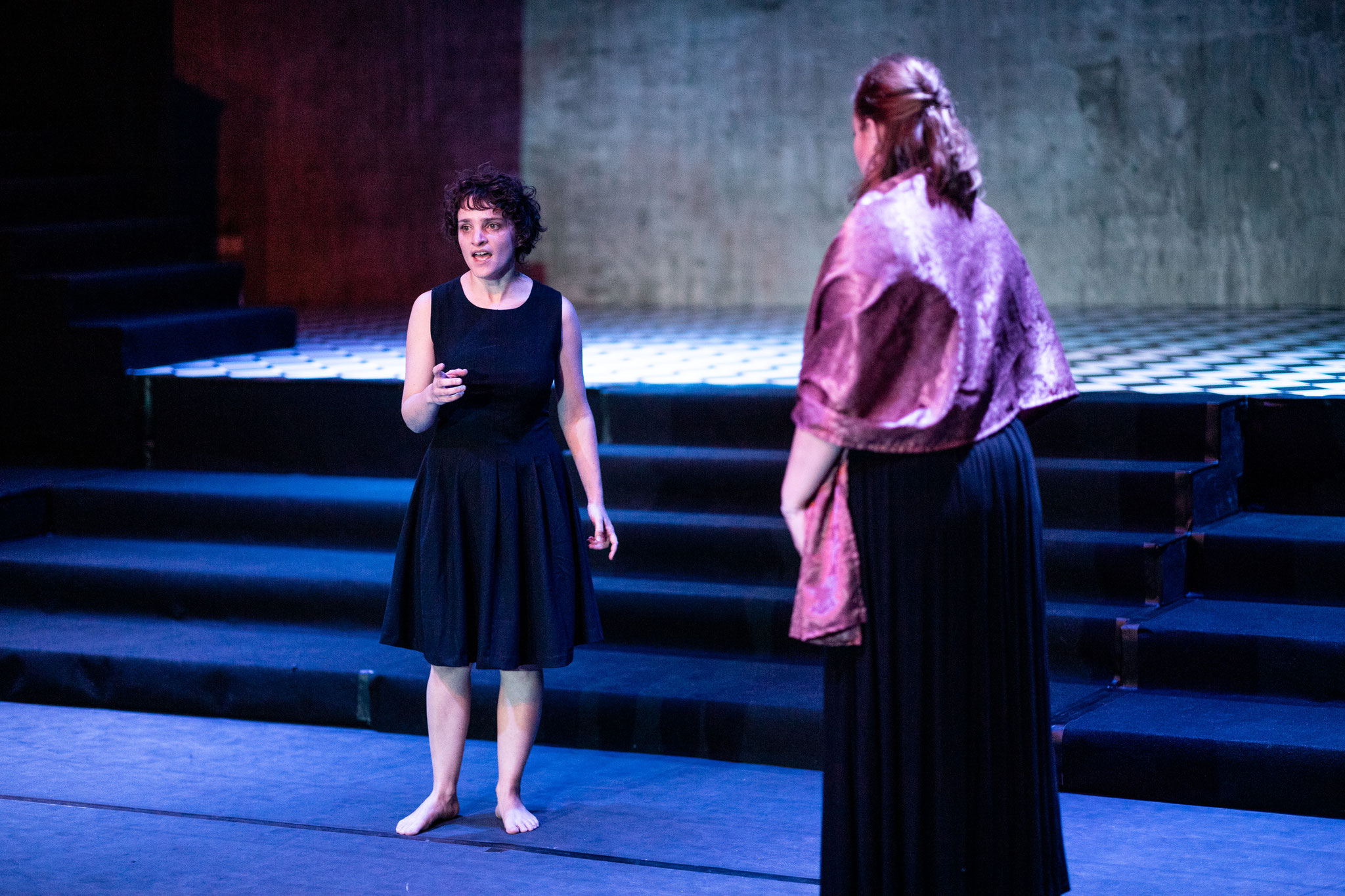
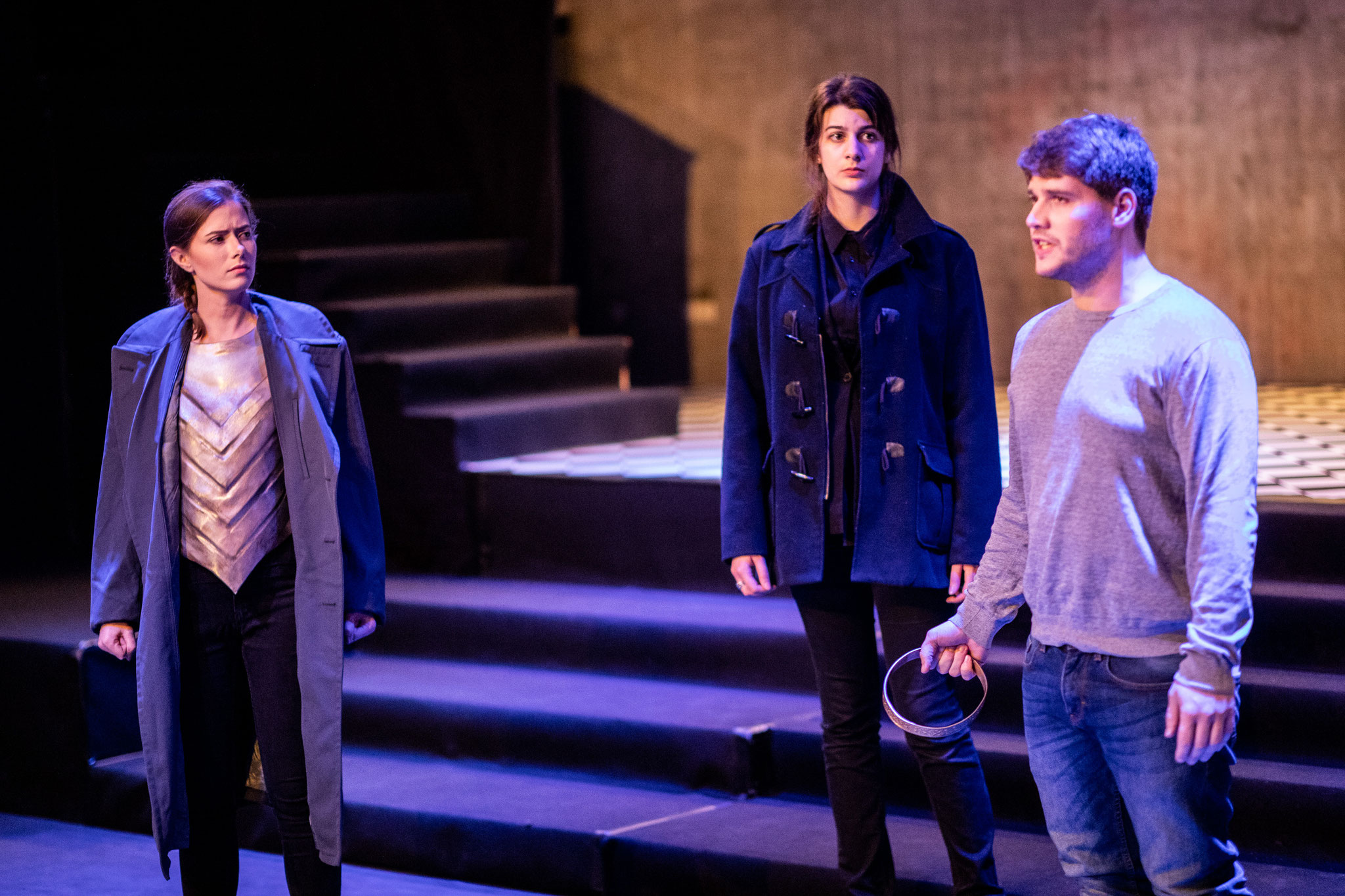
The design purposefully leaves off certain traditional stage elements such as side maskings and entrances. The idea behind that was to create a space that provides no area that shields one from
observation. Once an actor enters this space he or she is completely exposed to the gaze of their audience – both within the play and without.
The Casting
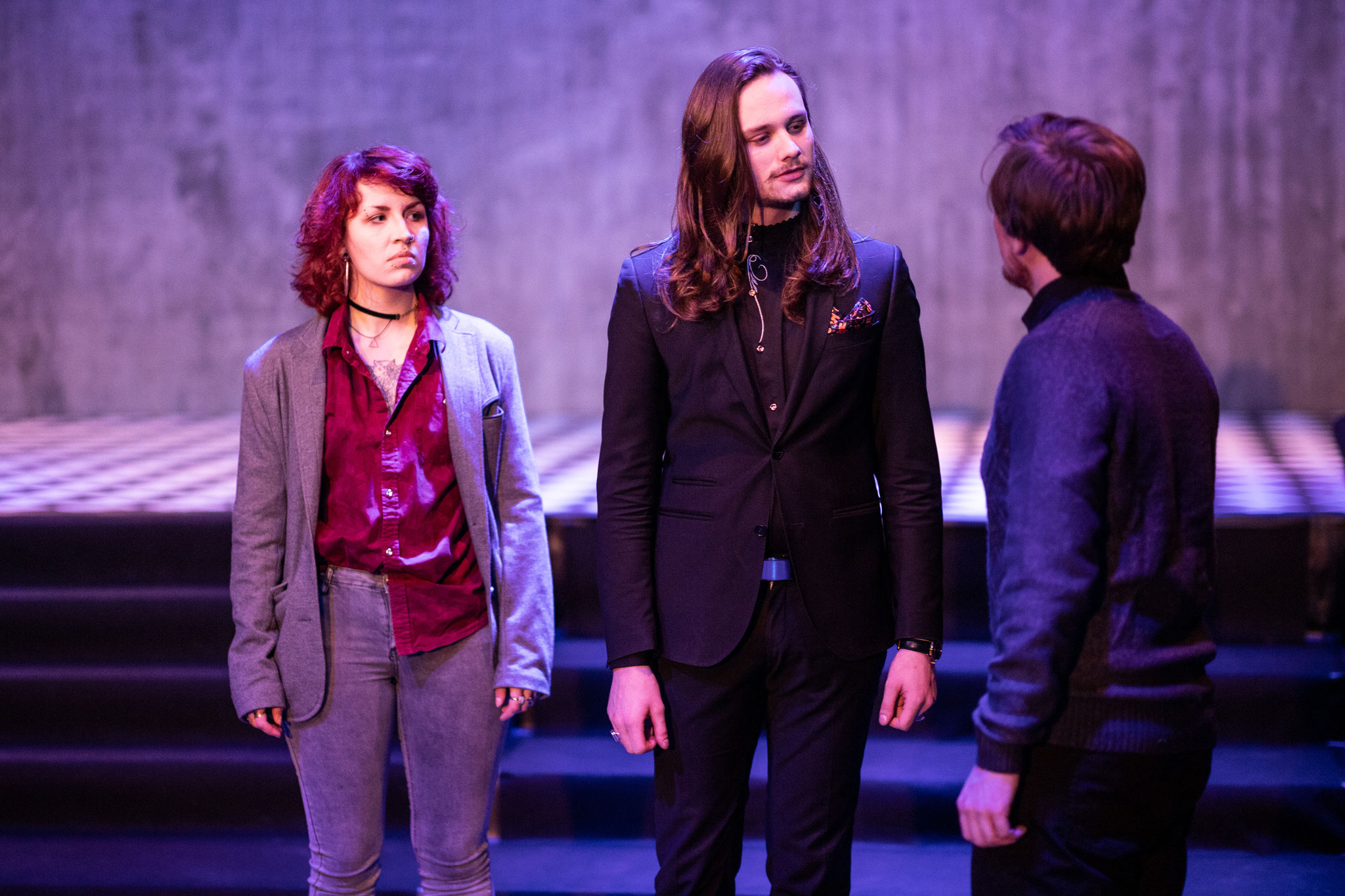
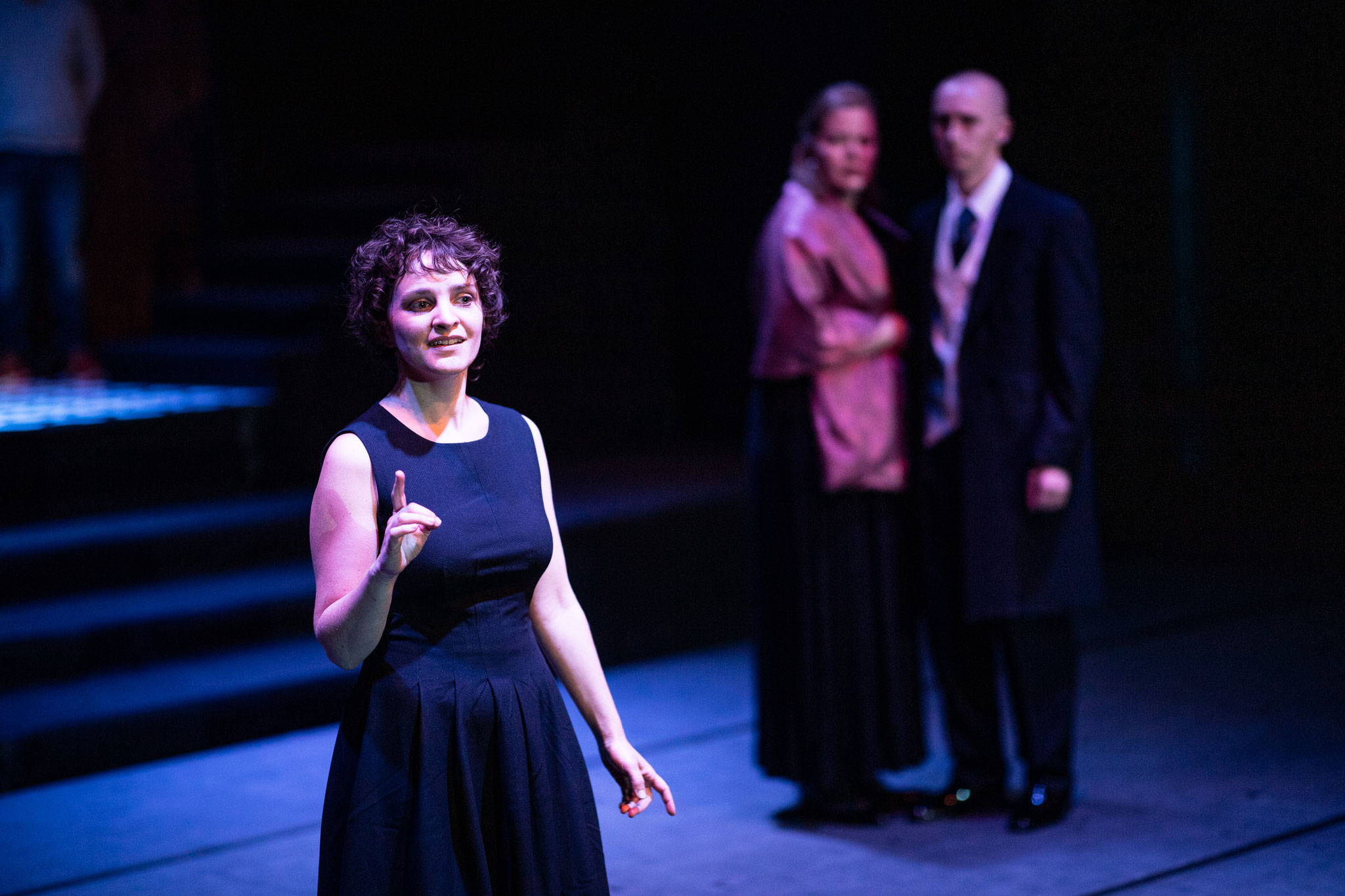
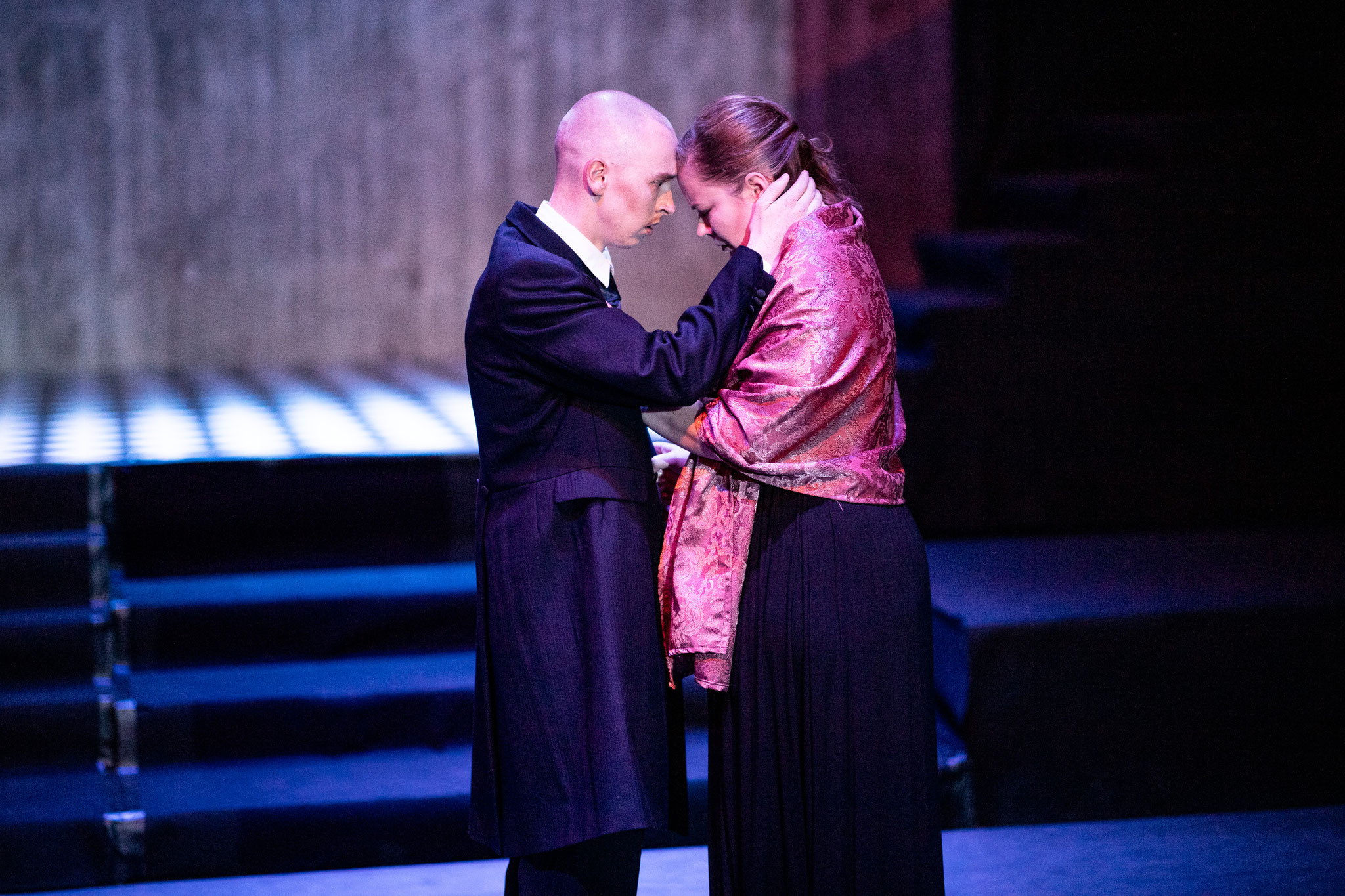
As in all our productions, we practiced gender blind casting. We purposefully did not change any names or pronouns in the text so as to leave it intact as a framework that the actors can fill
with their performances, wherein a character’s gender is only one of many markers
– Susanne Guertner
About the Music
Like the play, the music of Hamlet is shaped by the tension between freedom and predetermination. For the most part of the play, the musicians have a fixed stock of possible notes from which they can choose to spontaneously create new melodies. While the rhythm they play is fixed, they are free to play it independently of each other.
By following this principle, the band creates a music of predetermined sounds and harmonies, that will nonetheless be different and new for each performance. Thus, the theme of the play is mirrored through a music that is varied and yet fixed, spontaneous and determined, and constantly shifting and changing.
– Rolli Bohnes
Highlights
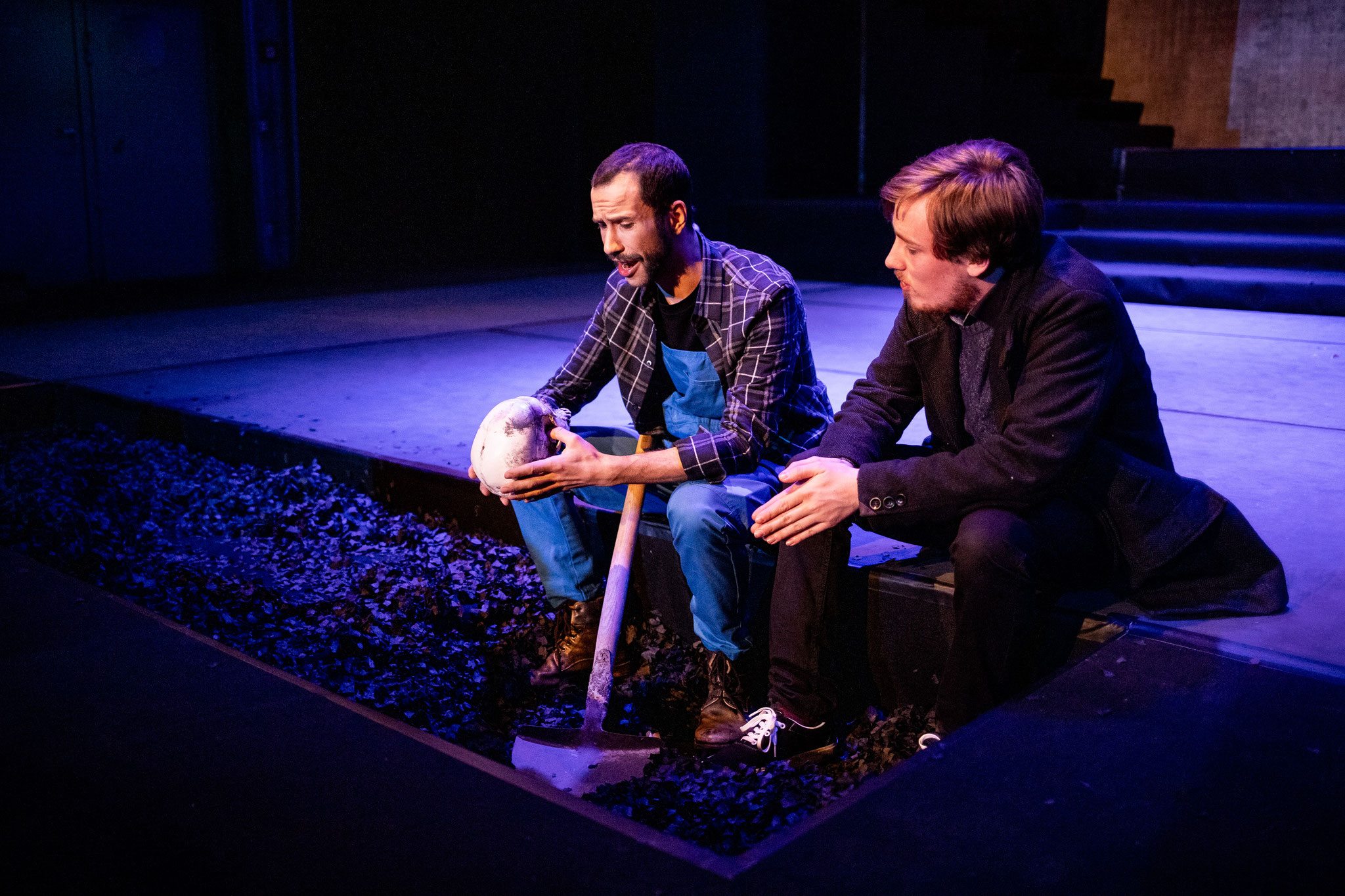
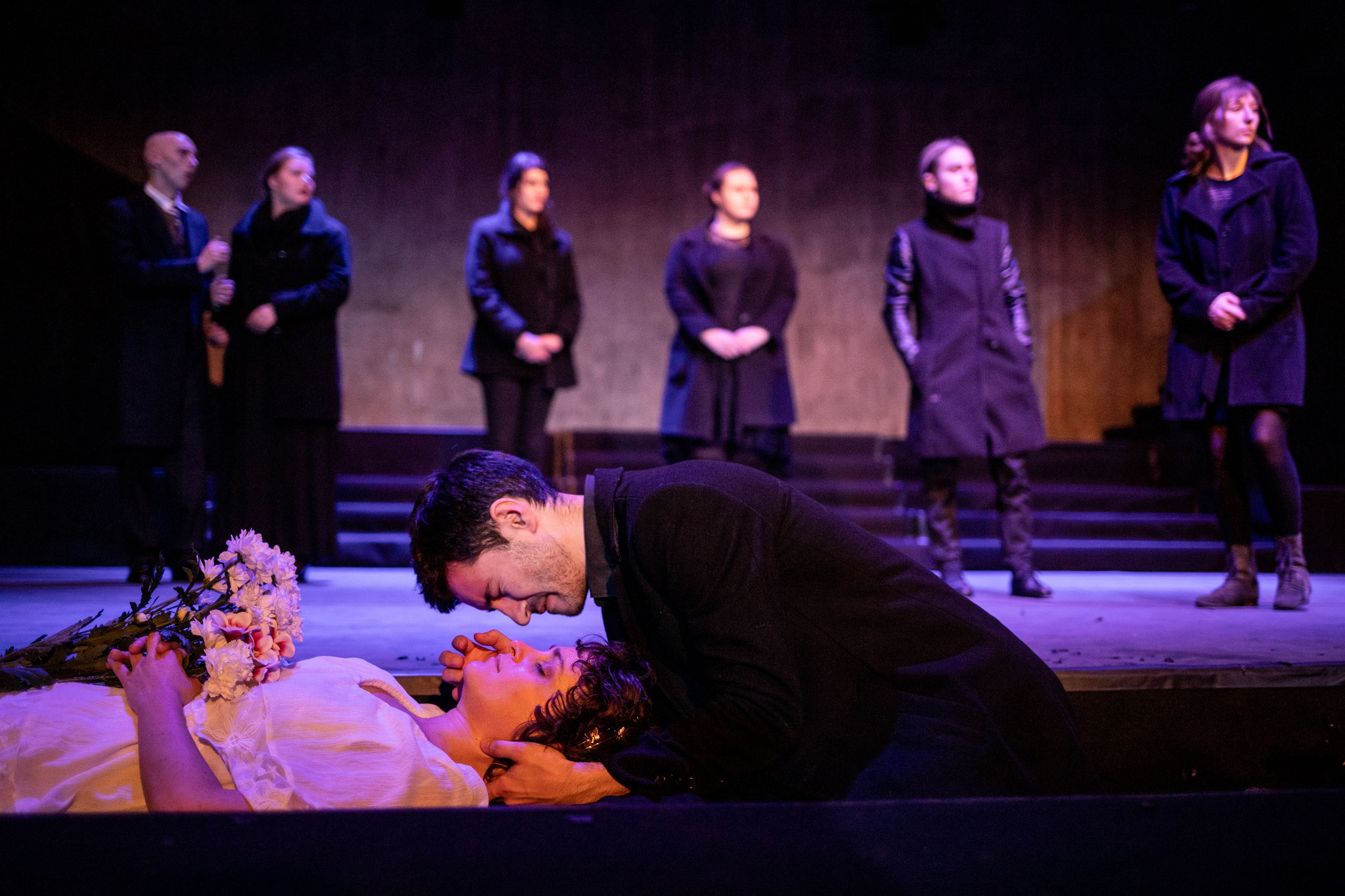
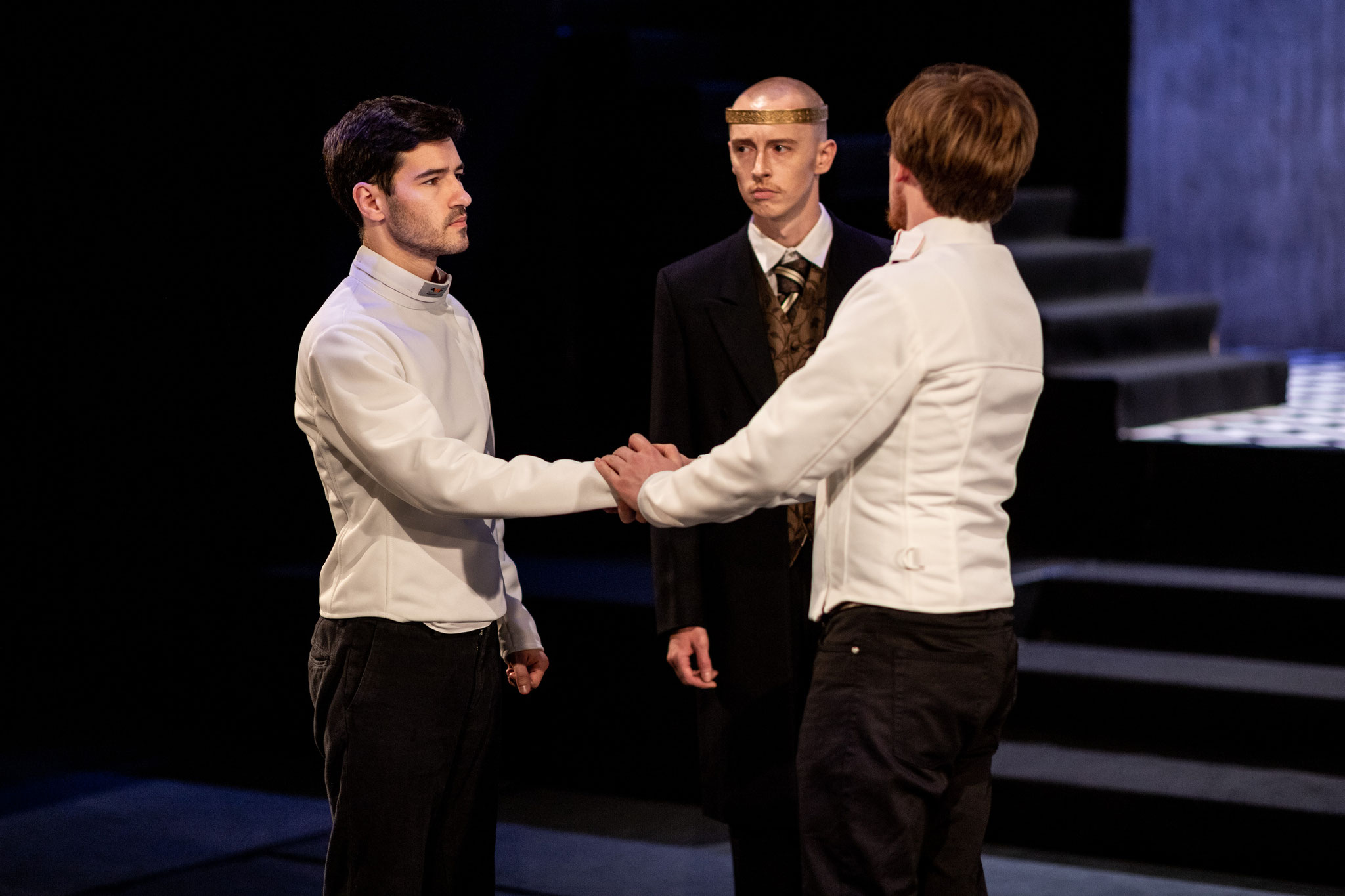
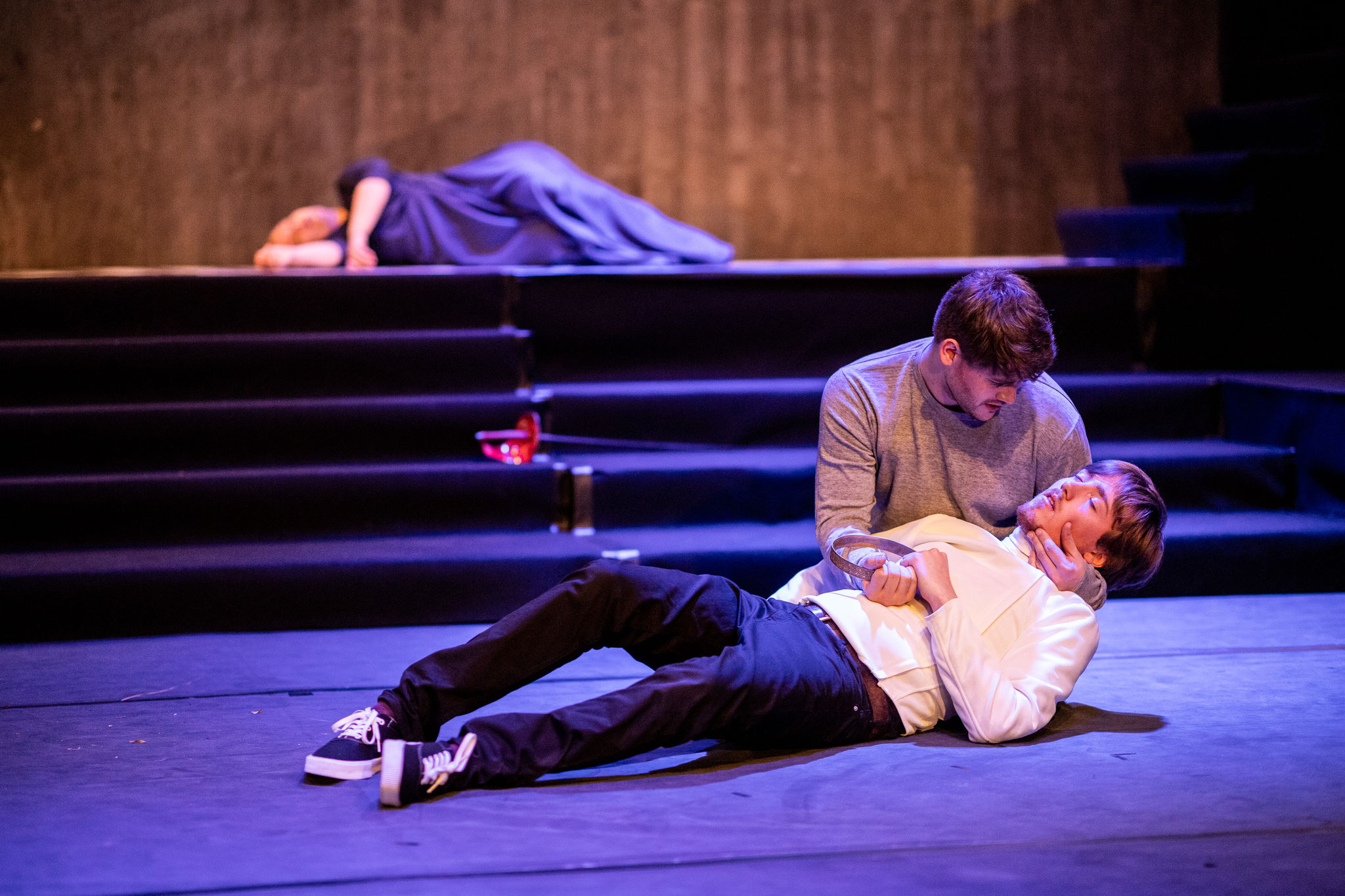


Cast
The Ghost/Claudius: Daniel Ott
Gertrude: Eva Hackl
Hamlet: Janosch Umbreit
Polonius: Benedikt Mendel
Ophelia: Kathi Meichelböck
Laertes: Nicolas Symeou
Horatio: Benjamin Ernstberger
Rosencrantz: Chris Gurău
Guildenstern: Simon Schießl
1st Player/Messenger: Franziska Kachl
2nd Player/2nd Gravedigger/Barnardo/Cornelius: Sandra Possberg
3rd Player/Marcellus/Fortinbras: Constance Valette
Francisco: Julia Zieglgänsberger
Voltemand: Franziska Furtner
Reynaldo: Florian Horn
Ambassador/Captain: Theodora Loos
1st Gravedigger: Schmandi Rakovszky
Crew
Director: Susanne Gürtner
Musical Director: Rolli Bohnes
Light: Maura Ballard, Quentin Federau
Backstage: Laura Dobmeier, Lisa Kempa
Costumes: Chris Gurău, Susanne Gürtner
Hair: Chris Gurău, Eva Hackl
Make-up: Diana Cao, Chris Gurău, Franziska Kachl, Nicolas Symeou
Artwork: Nicolas Symeou
Photography: Alexander Urban
Band
Christine Mogwitz: Piano, Alto Recorder, Percussion
Nobuaki Tanakaa: Violin, Percussion
Alban Tröndle: Double Bass, Percussion
Simon Hensel: French Horn, Percussion
Victoria Reinfurt: Oboe, Percussion